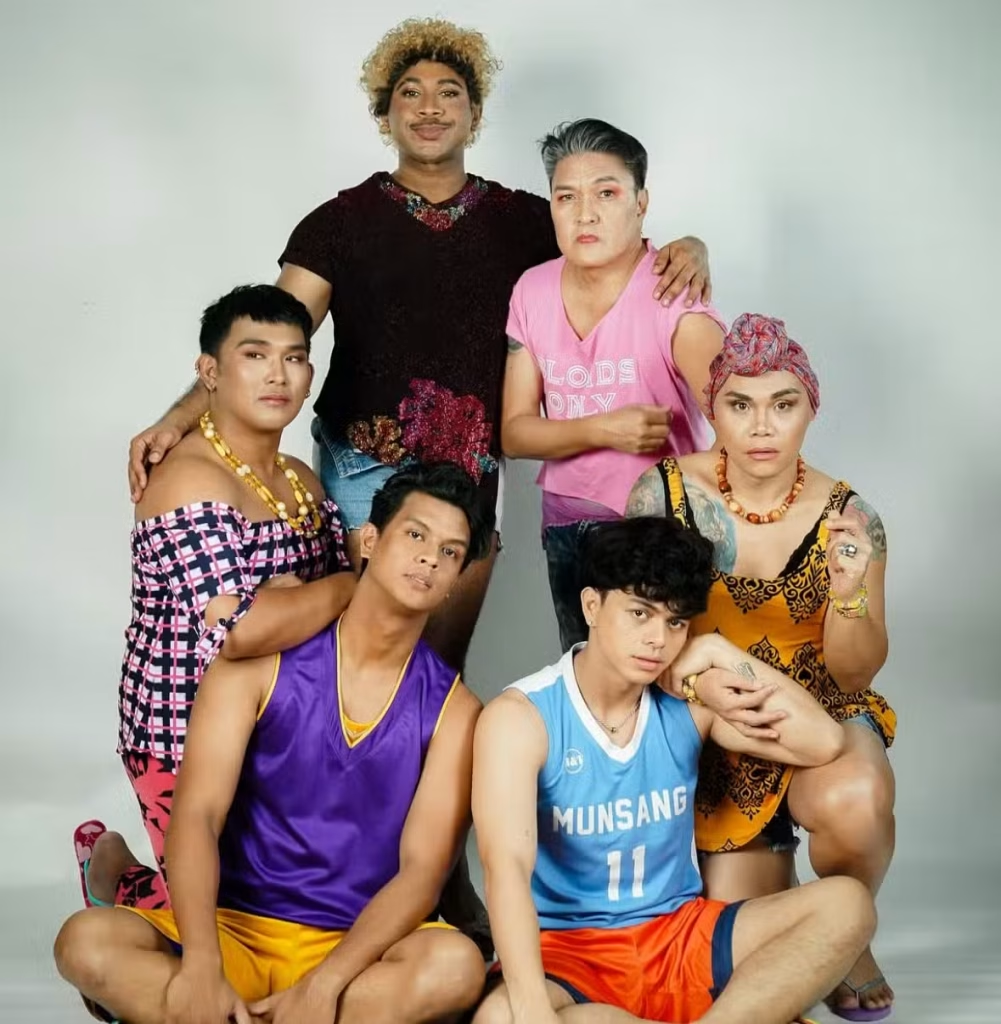
QUEZON CITY – In the dim glow of a Marikina beauty parlor during a stormy 2005 night, three queer souls clash over squandered electricity bills, toxic crushes, and the gritty hustle for survival. Two decades later, Vincent de Jesus’s razor-sharp play Ateng is back—not as a glossy reboot, but a stubborn time capsule, refusing to trade its early-aughts edge for modern polish. Staged at Rampa Drag Club through December 7, the revival is a cheeky reminder: We’ve danced forward in the LGBTQIA+ fight, but those old steps? They’re still tripping us up.
What started as a raw 50-minute one-act at the Virgin Labfest’s debut two decades ago has stretched to a punchy 90 minutes, but director Rem Zamora insists on zero tweaks to the script. “I wanted to keep it as close to the original as possible,” Zamora says. “This is a period in history, and history always teaches us lessons.” It’s a deliberate freeze-frame: No smartphones, no TikTok glow-ups—just the era’s brutal realities of gay bashing, where a smudge of lipstick could land you in the ER, and “bakla” slurs flew freely from hecklers. De Jesus, drawing from news clippings and a workshop with the late Rene Villanueva, channeled his own run-ins with store chases and sleepover shaming into Kiwi/Ateng, the no-nonsense parlorista and family anchor who’s equal parts fierce mama and weary warrior.
The plot? Pure chaotic kinship. Ateng (played with firecracker flair by Thou Reyes or de Jesus himself) confronts her aspiring drag-queen sibling Juicy (Jason Barcial or Io Balanon) after he blows the household’s light bill on his chiseled himbo boyfriend Onyx (Kokoy de Santos or Dyas Adarlo). Cue the fireworks: Power plays erupt as Ateng’s hard-earned cash clashes with Juicy’s starry-eyed schemes and Onyx’s pretty-boy leverage. It’s a whirlwind of dark laughs exposing class claws, emotional bruises, and the transactional tango of love in poverty’s shadow. “Nagpapataasan sila,” de Jesus explains. “Ang bading ba ang mas nakakaangat dahil may kaunti siyang pera, o ‘yung lalaki na ang currency ay ang kanyang good looks? Everyone is a product, and can be a victim, of society.” Drag here isn’t the bedazzled spectacle of today—it’s the scrappy, survivalist kind, born from limited lanes in a world that barely blinked.
For the uninitiated, Ateng—Palanca-winning gold from 2005—mirrors a queer Manila where violence simmered just beneath the surface. “You would hear about gay people getting beaten up just because they had makeup on—that’s how violent it was,” de Jesus recalls. “Ganoon kasalimuot ang buhay at pagiging bading noon.” The revival, backed by producer Boy Abunda, isn’t chasing nostalgia; it’s wielding it like a mirror. Abunda, a vocal ally, sees it as fuel for unfinished business: “Ayokong maputol ang pag-uusap tungkol sa maraming issues na kinakaharap ng komunidad. Conversations can lead to better understanding.” And to the kids inheriting the stage? “Malayo na pero marami pang dapat mangyari.”
Zamora’s touch keeps the laughs organic, not engineered. “Our approach doesn’t necessarily lean on comedy, but the comedy happens anyway, because it’s grounded in truth,” he notes. “And whether or not you laugh at their situation says something about us as individuals.” It’s that gut-punch humor—rooted in real rot like prejudice, abuse, and social ladders slick with compromise—that makes Ateng sting and stick. De Jesus hopes audiences walk away questioning: “Nag-iba na ba ang takbo ng buhay sa community? If so, how far have we really come? One step forward, two steps back? It’s a tango.”
In a city pulsing with Pride parades and policy wins, this revival is a sly gut check: Progress is a playlist, not a straight line. Catch it at Rampa (tickets via rampa.ph) before it bows out—because if 2005’s ghosts can still rattle us, imagine what they’re whispering about tomorrow.